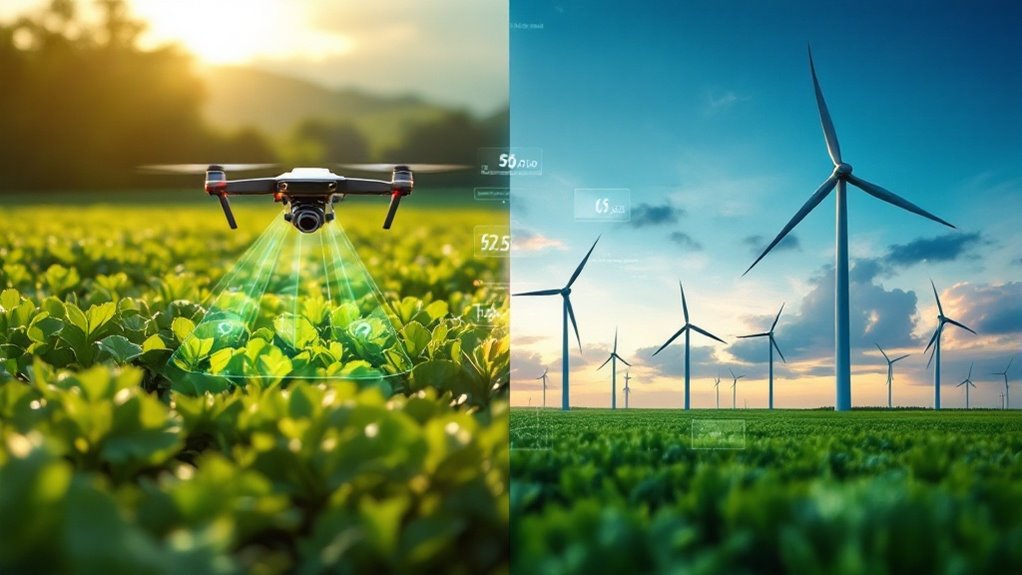

AI is changing the game for the environment, not just crunching numbers but getting its digital hands dirty: smart robots patrol farms, sniffing out pests; algorithms reroute delivery trucks so the air isn’t quite so chewy; and conservationists spy on endangered animals with digital sidekicks. Sure, training a colossal AI model demands more juice than your average blender, but pairing it with renewable energy can soften the blow. Curious how AI juggles all this eco-goodness—and its own footprint? Let’s keep going.
Even if the term “AI for Sustainability” sounds like the plot of a futuristic superhero movie—spoiler alert: there are no capes involved—it’s already shaping how humanity tackles some of the planet’s most pressing problems.
Imagine this: robots on farms, not as Terminator extras, but as harvest helpers, analyzing soil and spotting pests before they become crop-munching villains. AI is crunching numbers on greenhouse gas emissions and weather patterns, giving policymakers the data they need to fight climate change with more than just wishful thinking (and less than a Bat-Signal). AI-driven maintenance scheduling reduces downtime and costs for renewable energy sources, making clean power even more reliable.
Robots in fields, AI crunching climate data—no capes, just smarter farming and real tools to tackle climate change.
Here’s how AI is rolling up its digital sleeves:
- *Sustainable agriculture?* Absolutely. AI analyzes soil data, predicts crop yields, and detects early signs of diseases. That means fewer chemicals, less waste, and more food on the table.
- *Biodiversity conservation?* AI tracks species, monitors habitats, and sniffs out threats in real time. Think of it as a park ranger with a supercomputer for a brain.
- *Resource optimization?* AI is the Marie Kondo of industry—trimming waste, tracking impact, and sparking joy for anyone concerned about the planet.
But it’s not all green fields and happy animals. AI is helping to optimize logistics, reducing emissions by rerouting delivery trucks (and, let’s be honest, who doesn’t want their package faster *and* cleaner?).
Energy efficiency gets a boost, too—smart algorithms analyze consumption patterns, sometimes shaving 10-40% off energy use. That’s like switching your house from “always-on” to “eco-ninja” mode. The growing push toward economic growth through AI adoption could generate an impressive $15.7 trillion by 2030, with much of that potentially reinvested in sustainable technologies. However, it’s important to recognize that generative AI technologies have significant environmental implications, especially as their energy demands grow worldwide.
Of course, there’s a plot twist. Generative AI isn’t exactly carbon-neutral—it devours energy like a caffeinated Pac-Man. But there’s hope: integrating AI systems with renewable energy sources could shrink that digital footprint.
AI also turbocharges climate modeling, helps enforce green policies, and—cue dramatic soundtrack—guides decisions with hard data, not just gut feelings.
In short, AI for sustainability is less about flying cars and more about smarter farming, cleaner factories, and data-driven conservation. It’s not a movie, but it’s definitely worth watching.